Sandwich panels combine lightweight core materials with strong outer skins to deliver structural rigidity, thermal insulation, and reduced component weight. Common combinations include aluminum or steel facings bonded to polyurethane, polystyrene, honeycomb, wood, mineral-fiber, or composite cores. FRP skins are also widely used in vehicle bodies, modular buildings, refrigerated structures, marine interiors, and industrial enclosures.
Reliable panel performance depends on selecting sandwich panel adhesives that match both substrates and the production process. Adhesive chemistry, viscosity, open time, coating weight, pressing pressure, and cure conditions must work together. A strong adhesive cannot prevent delamination when surfaces are contaminated, the assembly exceeds its open time, or pressure is distributed unevenly.
The first step is to define every material in the panel, including coatings, primers, protective films, and surface treatments.
Typical facing materials include:
Aluminum and coated aluminum
Galvanized or painted steel
FRP and other composite sheets
Magnesium oxide board
Plywood and wood-based panels
Decorative laminates
Common core materials include:
Polyurethane or polyisocyanurate foam
Expanded or extruded polystyrene
Aluminum or paper honeycomb
Rock wool and glass wool
Wood and engineered boards
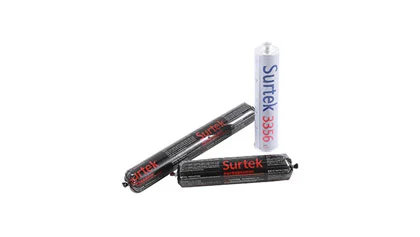
Two-component polyurethane adhesives are commonly selected for sandwich construction because they can bond combinations of metal, wood, plastics, composites, and rigid foams. Surtek formulations are available for glass-fiber panels, aluminum, steel, honeycomb structures, polyurethane panels, and polystyrene foam boards.
Compatibility must be confirmed with the actual production materials. A coating on a metal sheet or a release agent on an FRP skin can affect adhesion even when the underlying material is suitable.
Many delamination problems begin at the interface rather than within the adhesive.
Metal facings may carry oil, oxide, dust, or protective-film residue. FRP panels can retain mold-release agents, while foam cores may have loose particles or an uneven cut surface. Each substrate should therefore be assessed for:
Cleanliness
Surface energy
Moisture content
Flatness
Porosity
Coating adhesion
Surface-treatment requirements
Cleaning, abrasion, corona treatment, plasma treatment, or primer application may be required depending on the substrate. Surface preparation must be consistent across the full panel, especially near edges and corners where separation often begins.
A useful production trial should compare untreated and prepared samples after curing, environmental aging, and destructive testing. Visual inspection immediately after pressing cannot confirm long-term adhesion.
Open time is the interval available between adhesive application and assembly. It must accommodate coating, core placement, facing alignment, transfer to the press, and final pressure application.
If the open time is too short, the adhesive may begin reacting or lose wetting ability before the panel is closed. This can produce:
Dry or weakly bonded areas
Edge lifting
Incomplete adhesive transfer
Localized bubbles
Reduced peel resistance
An unnecessarily long open time may reduce production efficiency and extend the period before handling.
Surtek offers two-component polyurethane formulations with different viscosities and open-time ranges so the adhesive can be matched to manual, roller, or automated panel assembly. Final values should be selected from the current technical data sheet and verified under actual factory temperature and humidity.
The production team should record:
| Process Variable | What It Influences |
|---|---|
| Adhesive temperature | Viscosity and coating behavior |
| Ambient temperature | Reaction speed and open time |
| Mixing ratio | Cure completeness and final properties |
| Coating weight | Coverage and bond-line continuity |
| Assembly time | Surface wetting before pressing |
| Pressing time | Handling strength and panel stability |
| Post-cure period | Development of final bond performance |
A two-component system must also be mixed accurately. Incorrect ratios or incomplete blending can leave soft, brittle, or uncured areas within the panel.
A structural panel adhesive should form a continuous bond between the skin and core. Excess adhesive increases cost and may lengthen curing, while insufficient coverage creates unbonded areas that can grow under heat, vibration, or moisture exposure.
Application methods may include:
Serrated scraper
Roller coating
Meter-mix dispensing
Multi-bead application
Automated spreading systems
Surtek recommends uniform coating and provides a general reference consumption range for its sandwich-panel system, although the required amount changes with substrate roughness, porosity, adhesive viscosity, and panel design.
Foam and honeycomb cores require particular attention. Excessive pressure can crush a low-density foam or distort honeycomb cells, while insufficient adhesive may contact only the highest points of an uneven surface.
The coating trial should confirm full transfer to both substrates after the test panel is separated. Areas without transfer can indicate poor wetting, insufficient coating weight, or inadequate pressure.
Pressing keeps the skins flat and brings the substrates into uniform contact while the adhesive develops handling strength. The required pressure depends on panel size, core compressive strength, surface flatness, adhesive viscosity, and bond-line design.
Possible pressing methods include:
Hydraulic platen press
Vacuum press
Roller press
Weighted flat assembly
Continuous lamination line
Pressure should be distributed across the complete panel. Uneven loading can leave weak areas in the center or around warped facings. Excessive pressure can force adhesive away from the interface, creating a starved bond line.
For large panels, manufacturers should verify:
Press-bed flatness
Pressure distribution
Panel alignment
Core compression
Edge support
Pressing temperature
Time before demolding
The panel should not be moved, trimmed, or stacked before sufficient handling strength has developed. Premature movement can disturb the adhesive layer even when the surfaces initially appear secure.
Delamination can originate from material incompatibility, surface contamination, incomplete curing, thermal expansion, moisture exposure, or repetitive mechanical loading.
| Delamination Pattern | Likely Process Checks |
|---|---|
| Adhesive remains on the core only | Skin preparation and surface energy |
| Adhesive remains on the skin only | Core cleanliness or adhesive penetration |
| Separation begins at edges | Edge coating, pressure and moisture exposure |
| Random internal voids | Coating uniformity or entrapped air |
| Failure after heating | Thermal expansion and cure completeness |
| Failure after vibration | Adhesive flexibility and fatigue resistance |
| Foam tears before the bond fails | Adhesion may exceed core strength |
A cohesive failure within the foam can indicate a stronger interface than clean separation between the adhesive and facing. However, acceptance criteria must reflect the panel’s intended loads and applicable testing requirements.
Panels should be evaluated after full cure through suitable peel, tensile, shear, flexural, aging, temperature-cycle, and moisture-resistance tests. Manufacturers of vehicle bodies may also need vibration and fatigue validation.
Building insulation panels and vehicle sandwich structures may use similar materials, but their service conditions differ.
A vehicle panel adhesive may need to tolerate road vibration, repeated body movement, temperature cycling, and dynamic loading. Van, truck, trailer, and specialty-vehicle panels often combine metal or FRP skins with aluminum honeycomb or insulation cores.
A structural body panel adhesive should only be selected after confirming the required load path, stiffness, elongation, aging resistance, flame performance, and manufacturing process. Not every general lamination adhesive is suitable for safety-relevant structural joints.
Building panels may instead prioritize weather resistance, insulation-system durability, large-area coating, dimensional stability, and efficient continuous production. The adhesive formulation should therefore be chosen for the actual application rather than reused across unrelated panel types.
Two-component polyurethane sandwich panel adhesives are commonly used because they can bond combinations of metals, FRP, wood, composites, honeycomb, and rigid foam cores. The final choice depends on the substrates, production process, and service conditions.
Some polyurethane systems can bond all three material categories, but compatibility must be tested with the actual metal coating, FRP surface, foam density, release agents, and production conditions. Material names alone are not enough for final selection.
Common causes include contaminated surfaces, incomplete mixing, insufficient coating weight, expired open time, uneven pressure, premature handling, trapped air, incompatible materials, incomplete curing, thermal cycling, and moisture exposure.
Pressure should create uniform contact without crushing the core or forcing most of the adhesive from the joint. The correct value depends on panel size, core compressive strength, surface flatness, adhesive viscosity, and pressing method.
A production trial can be separated after pressing to inspect adhesive transfer to both surfaces. Dry areas, isolated contact points, or uneven coverage may indicate insufficient coating weight, poor wetting, warped substrates, or uneven pressure.
Often, yes. A vehicle panel adhesive may require greater fatigue resistance, flexibility, vibration resistance, and tolerance of repeated temperature cycling. Building panels may place greater emphasis on weather resistance, insulation durability, large-area coating, and continuous production efficiency.
Successful sandwich-panel bonding depends on matching the adhesive to the facing, core, production speed, and service environment. Surface preparation, mixing accuracy, coating uniformity, open time, pressing pressure, and full cure must all be controlled to reduce voids and delamination.
At Surtek, we develop customizable sandwich panel adhesives for metal, glass-fiber, wood, honeycomb, polyurethane, and polystyrene structures. Different viscosities and open times are available to support panel OEMs, construction-system manufacturers, and industrial laminators. Material samples, panel dimensions, production temperature, coating method, press conditions, and required performance should be provided before final product selection.
 English