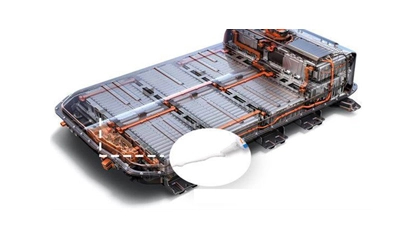
Cell-to-pack architecture removes or reduces conventional intermediate battery modules and integrates cells more directly into the pack structure. This approach can improve space utilization, reduce component count, and support lighter battery systems, but it also places greater responsibility on the materials connecting cells, cooling components, frames, and pack enclosures.
In this highly integrated structure, EV battery pack adhesives may perform several functions at once. Depending on the joint, the material may provide structural bonding, environmental sealing, vibration damping, electrical insulation, or heat transfer. The adhesive therefore needs to be selected for its exact interface rather than treated as a universal material for the entire pack.
In a conventional module-based battery, cells are first assembled into modules, and those modules are then installed inside the pack. A battery module adhesive may secure cells to module frames, spacers, end plates, or cooling components.
Cell-to-pack assembly reduces these intermediate structures. Cells may be bonded directly to a tray, cooling plate, multifunctional interlayer, or other pack-level component. The adhesive joint can therefore become part of the pack’s primary load path.
This creates several requirements:
Stable bonding over the vehicle service period
Compatibility with cell housings and coated metals
Controlled flexibility during cell expansion
Resistance to road vibration and mechanical shock
Reliable performance during temperature cycling
Processability in automated production
Electrical insulation where required
Heat transfer at thermal-management interfaces
The ideal properties vary by location. A rigid structural joint and a flexible sealing joint should not automatically use the same formulation.
A structural battery pack adhesive helps maintain the intended position of cells and transfers loads across a larger bonded area. Compared with point fasteners, an adhesive layer can distribute stress more evenly and reduce local pressure concentrations.
Common bonding interfaces may include:
Cell to cooling plate
Cell to bottom tray
Cell to side frame
Crossbeam to enclosure
Cooling plate to structural panel
Pack cover to supporting frame
Internal reinforcement components
The adhesive’s stiffness must match the design objective. A high-modulus material can improve structural rigidity, but an excessively rigid bond may concentrate stress when cells, aluminum panels, and steel components expand at different rates.
More flexible polyurethane systems can accommodate dimensional movement and help absorb vibration. However, the joint must still provide adequate shear and peel resistance under expected loads.
The engineering team should evaluate the complete bonded assembly rather than comparing only laboratory lap-shear values.
Electric vehicle battery packs experience repeated vibration from road input, powertrain operation, acceleration, braking, and impacts. In a cell-to-pack structure, movement between adjacent components can damage electrical connections, cooling interfaces, insulation, or cell housings.
An appropriately designed battery pack assembly adhesive can help:
Restrict cell movement
Distribute vibration loads
Reduce local stress concentrations
Cushion interfaces between dissimilar materials
Maintain contact with thermal-management surfaces
Limit noise caused by internal movement
CATL’s CTP 3.0 design illustrates how cells and elastic interlayers can form an integrated load-bearing structure intended to improve shock and vibration resistance.
Adhesive selection should consider both normal driving vibration and exceptional events. Battery safety validation may include vibration, mechanical shock, mechanical integrity, and other environmental tests under regulatory and OEM-specific programs.
A material that performs well under a single static load may still fail after repeated cycling. Fatigue resistance, elongation, modulus retention, and adhesion after environmental aging should therefore be assessed.
Battery cells generate heat during charging and discharging. Temperature differences between cells can affect performance, aging, and charging behavior, so the thermal-management system must maintain reliable contact across the cooling interface.
A thermally conductive EV battery adhesive can connect cells or structural components to cooling plates while filling small gaps caused by manufacturing tolerances. Its main functions may include:
Reducing interfacial thermal resistance
Maintaining contact during vibration
Compensating for minor surface unevenness
Bonding the cooling plate to adjacent structures
Supporting a more compact assembly
Thermal conductivity is only one selection factor. A very conductive material may still be unsuitable if it has poor adhesion, insufficient flexibility, excessive density, difficult dispensing behavior, or an incompatible cure profile.
Bond-line thickness is also critical. A thicker adhesive layer can accommodate tolerance variation but usually creates a longer heat-transfer path. The production process must therefore control dispensing volume, compression, and final gap thickness.
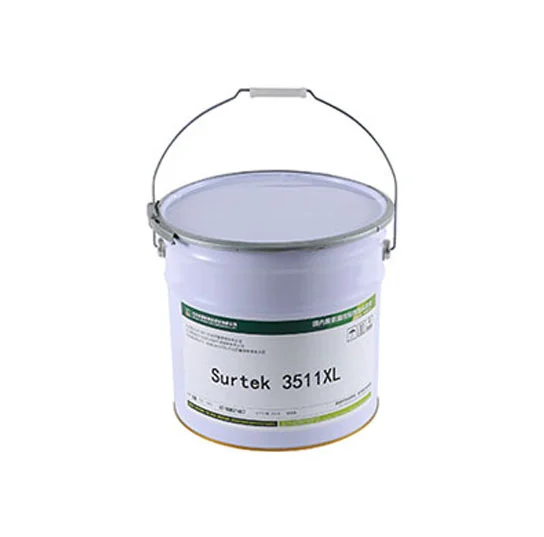
Surtek provides polyurethane thermal-conductive structural adhesives for battery applications requiring both mechanical support and heat-transfer performance. The product configuration should be matched to the specific substrates, thermal target, bond-line design, and assembly process.
Battery pack sealing protects internal electrical and electronic components from water, dust, road salts, and other contaminants. Sealing may be required around:
Pack covers
Cable outlets
Cooling-system passages
Service openings
Joints between enclosure panels
Electronic control areas
A sealant must maintain adhesion while accommodating joint movement caused by temperature change, vibration, and enclosure deformation.
Sealant and structural adhesive functions should be distinguished. A structural material may be too rigid for a moving perimeter joint, while a flexible sealant may not provide the strength needed for a load-bearing connection.
Polyurethane potting materials can also protect sensitive components by filling cavities and providing insulation, moisture resistance, and vibration buffering. Surtek’s EV battery range includes structural adhesives, thermally conductive polyurethane adhesives, potting materials, and IPN adhesive solutions for different pack-level functions.
| Pack Interface | Main Adhesive Requirement |
|---|---|
| Cell to cooling plate | Thermal conductivity, gap filling and durable adhesion |
| Cell to tray | Structural strength, flexibility and fatigue resistance |
| Internal frame bonding | High load transfer and dimensional stability |
| Pack cover sealing | Elasticity, environmental resistance and serviceability |
| Electronic potting | Electrical insulation, moisture protection and low stress |
| Dissimilar-metal joint | Adhesion, corrosion control and thermal-movement tolerance |
Substrate preparation is equally important. Aluminum, steel, coated cell housings, plastics, and composite panels have different surface energies and contamination risks.
Before production approval, manufacturers should confirm whether the joint requires cleaning, abrasion, plasma treatment, or primer application. Adhesive performance on a laboratory test coupon may not represent a production surface contaminated by forming oil, oxide, coolant, or release agents.
A suitable adhesive must fit the production line. Key processing questions include:
Is the material one-component or two-component?
How is the mixing ratio controlled?
What is the usable working time?
How quickly can the assembly be moved?
Is room-temperature curing sufficient?
Can heat acceleration be used safely?
What bead size and dispensing accuracy are required?
How will incomplete mixing or missed dispensing be detected?
High strength is of limited value if the adhesive cures too slowly for the target cycle time or develops air pockets during automated application.
The production trial should verify dispensing consistency, open time, fixture time, cure completeness, bond-line thickness, and inspection methods under real line conditions.
Depending on the interface, EV battery pack adhesives may provide structural bonding, thermal transfer, environmental sealing, vibration damping, electrical insulation, gap filling, or component potting. Different pack locations usually require different adhesive properties.
Not usually. A cell-to-cooling-plate joint may require thermal conductivity and controlled bond-line thickness, while a pack-cover joint may require flexibility, sealing, and serviceability. Each interface should be evaluated separately.
An appropriately designed adhesive layer can restrict cell movement, distribute mechanical loads, cushion interfaces, reduce local stress concentrations, and maintain contact between cells, cooling components, frames, and structural panels.
A thicker bond line can compensate for surface tolerances but increases the distance through which heat must travel. A thinner layer may improve heat transfer but requires more accurate surfaces and dispensing control.
A structural adhesive transfers load and secures components, while a sealant mainly accommodates movement and blocks moisture, dust, salts, and contaminants. Some products may provide multiple functions, but their suitability must be verified for the specific joint.
The trial should assess dispensing consistency, mixing ratio where applicable, bead dimensions, open time, fixture time, bond-line thickness, cure completeness, adhesion, thermal performance, vibration resistance, sealing, and inspection methods.
Cell-to-pack battery architecture increases integration and makes adhesive performance more closely connected to pack structure, thermal control, vibration resistance, sealing, and manufacturing efficiency. No single formulation is ideal for every interface. Structural joints, cooling interfaces, enclosure seals, and potted electronics each require a different balance of strength, flexibility, conductivity, insulation, and processability.
Surtek provides customizable EV battery pack adhesives for structural bonding, thermal management, sealing, vibration protection, and component potting. Our portfolio includes IPN adhesives, polyurethane structural adhesives, thermally conductive structural adhesives, and polyurethane potting solutions that can be evaluated according to the pack design, substrates, production process, and validation requirements.
 English