PUR hot melt adhesive combines the fast handling strength of a conventional hot melt with moisture-activated chemical curing. After being heated and applied, the adhesive cools to create initial strength. It then reacts with moisture to form a more durable bond with improved resistance to heat, humidity, and chemicals.
This dual-stage mechanism makes PUR suitable for flat lamination, profile wrapping, edge banding, automotive interior assembly, textiles, and composite-material production. However, reliable results depend on controlling application temperature, substrate condition, environmental humidity, open time, coating weight, and pressure as one process.
A polyurethane reactive adhesive does not reach its final properties immediately after pressing. Bond development occurs in two stages:
Physical setting: The molten adhesive cools and solidifies, providing enough initial strength for handling or further processing.
Chemical curing: Reactive groups in the adhesive crosslink with moisture from the air or substrates, gradually developing final heat, chemical, and moisture resistance.
Initial tack should not be confused with full cure. A laminated panel may appear firmly bonded after leaving the press but still require additional time before trimming, testing, packaging, or exposure to demanding service conditions.
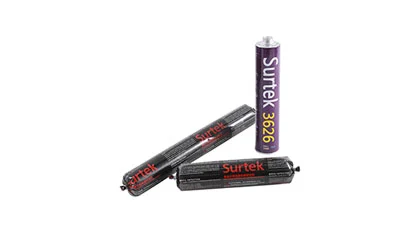
Surtek PUR hot melt adhesive has 100% solid content, with an adjustable reference open time of 30–60 seconds and a full curing period of approximately one to three days. The actual cure rate is affected by environmental temperature and humidity.
Temperature controls adhesive viscosity, wetting behavior, coating consistency, and open time. If the temperature is too low, the adhesive may be too viscous to spread evenly or penetrate the substrate surface. This can result in poor wetting, visible coating lines, insufficient transfer, and localized bond failure.
Excessive temperature can create different problems:
Unnecessarily low viscosity
Adhesive dripping or squeeze-out
Premature chemical degradation
Increased fumes
Material buildup inside heated equipment
Shortened adhesive working life in the melter
The melter, hose, applicator head, roller, and substrate contact zone should be monitored separately. A correct tank temperature does not guarantee that the adhesive reaches the substrate at the same temperature.
The line should record:
Melter setpoint and actual temperature
Hose and applicator temperature
Roller temperature where applicable
Adhesive residence time in heated equipment
Substrate surface temperature
Ambient production temperature
Application temperature must follow the technical specification for the selected grade. Different formulations may require different heating conditions even when they are supplied by the same polyurethane hot melt adhesives manufacturer.
Cold substrates remove heat from the adhesive quickly. This may shorten the effective open time before the second material is applied or before the assembly reaches the pressure roller. A warm production area can extend the available bonding window, while low temperatures may cause the adhesive to set before adequate contact is achieved. One PUR technical data sheet notes that higher temperatures can lengthen open and set times, while lower temperatures can shorten them.
Substrates must also be clean, dry, and free from contaminants such as:
Dust
Oil and grease
Mold-release agents
Plasticizer migration
Condensation
Loose fibers
Surface coatings incompatible with the adhesive
Some plastics, films, coated boards, and low-surface-energy materials may require pretreatment, abrasion, plasma treatment, corona treatment, or a compatible primer. Production trials should use the actual commercial substrate rather than a visually similar sample.
Surface preparation is especially important when materials have been stored in cold conditions and then moved into a warmer factory. Condensation may form even when the surface appears clean.
Open time is the period between adhesive application and the point at which the substrates must be joined. It is affected by formulation, application temperature, coating weight, substrate temperature, line speed, and surrounding airflow.
When the assembly is completed too late, the adhesive surface may have cooled or skinned over. The result can include:
Low initial tack
Incomplete surface wetting
Edge lifting
Foil spring-back
Bubbles or unbonded areas
Reduced final bond strength
Joining too early can also create problems if the adhesive is still excessively fluid. Pressure may force too much material away from the bond line, causing squeeze-out or an uneven coating.
A practical open-time study should measure the interval from the applicator to the pressure point under normal production conditions. The line speed must keep every section of the panel, film, or profile within the qualified bonding window.
Surtek offers PUR formulations for flat lamination, profile wrapping, and edge banding, where strong initial adhesion helps reduce foil spring-back after bonding.
Moisture is required for chemical crosslinking, but uncontrolled humidity can make curing less predictable.
Low humidity may slow the final cure, particularly when both substrates have low moisture permeability. High humidity can accelerate reaction at exposed surfaces and may reduce storage stability if uncured adhesive is repeatedly exposed to ambient air.
Cure speed is influenced by:
Relative humidity
Air temperature
Substrate moisture content
Substrate permeability
Bond-line thickness
Coating weight
Accessibility of moisture to the adhesive
Wood and other moisture-containing materials may support faster curing than low-permeability plastics. Technical data for PUR adhesives also confirms that cure time varies with air temperature, relative humidity, substrate type, and bond-line thickness.
Factories should record humidity and temperature rather than relying only on seasonal assumptions. Finished assemblies should remain under suitable conditions until enough cure has developed for the next operation.
Temperature and humidity cannot correct an unsuitable adhesive quantity. Too little adhesive may leave dry areas and fail to compensate for substrate roughness. Too much can increase cost, extend curing time, cause squeeze-out, and create an uneven surface.
Pressure must bring the two substrates into uniform contact without forcing most of the adhesive out of the joint. The correct pressure depends on material stiffness, surface texture, adhesive viscosity, and lamination speed.
| Process Variable | Too Low | Too High |
|---|---|---|
| Application temperature | Poor flow and wetting | Degradation or excessive flow |
| Coating weight | Dry spots and weak coverage | Squeeze-out and slower curing |
| Lamination pressure | Incomplete contact and bubbles | Thin or starved bond line |
| Line speed | Excessive heating exposure | Open time may be exceeded |
| Humidity | Slow chemical curing | Premature moisture exposure |
Process changes should be made one variable at a time. This makes it easier to identify whether a defect originates from temperature, open time, pressure, coating weight, or substrate preparation.
Professional PUR adhesive manufacturers should help customers establish process parameters around the real production line. A useful control plan can include:
Adhesive and substrate batch identification
Melter, hose, and applicator temperatures
Ambient temperature and humidity
Coating weight
Line speed
Press or roller pressure
Open-time measurement
Initial peel or handling-strength test
Final bond test after full cure
Visual checks for bubbles, lifting, and squeeze-out
Adhesive storage and equipment shutdown procedures are also important. Reactive hot melt must be protected from atmospheric moisture before application, and prolonged heating should be avoided. Surtek recommends sealed storage in a dry, controlled environment to protect the adhesive from heat and humidity.
Initial setting occurs when the molten adhesive cools and develops enough strength for handling. Full curing occurs later through a moisture-activated chemical reaction, which develops the final heat, humidity, chemical, and durability performance.
A low application temperature can increase viscosity and reduce adhesive flow, wetting, and coating uniformity. This may cause visible coating lines, poor adhesive transfer, dry areas, edge lifting, and localized bond failure.
Yes. Excessive or prolonged heating can reduce viscosity too far, increase fumes, encourage squeeze-out, and contribute to adhesive degradation or buildup inside the melter, hose, and application equipment.
Moisture is required for chemical crosslinking. Low humidity can slow the final cure, particularly between low-permeability substrates, while excessive moisture exposure can accelerate surface reaction and reduce the storage stability of uncured adhesive.
Common causes include assembly after the open time has expired, low substrate temperature, insufficient coating weight, poor surface preparation, uneven pressure, inadequate wetting, or movement before sufficient handling strength develops.
Record the adhesive and substrate batch, melter and hose temperatures, substrate temperature, ambient humidity, coating weight, line speed, pressure, open time, initial handling strength, full-cure test results, and visible defects.
Consistent PUR lamination depends on controlling the entire bonding window. Application temperature determines flow and wetting, substrate temperature influences cooling, open time controls when parts must be joined, and humidity affects the subsequent chemical cure. Coating weight, pressure, line speed, and surface preparation must then support uniform contact across the bonded area.
As a hot melt adhesive China supplier, Surtek develops polyurethane reactive adhesive solutions for automotive interiors, furniture, textiles, electronics, packaging, and composite lamination. We can work with manufacturers to evaluate substrates, application equipment, line speed, open-time requirements, and curing conditions when selecting a suitable PUR formulation.
This is the last one.
 English